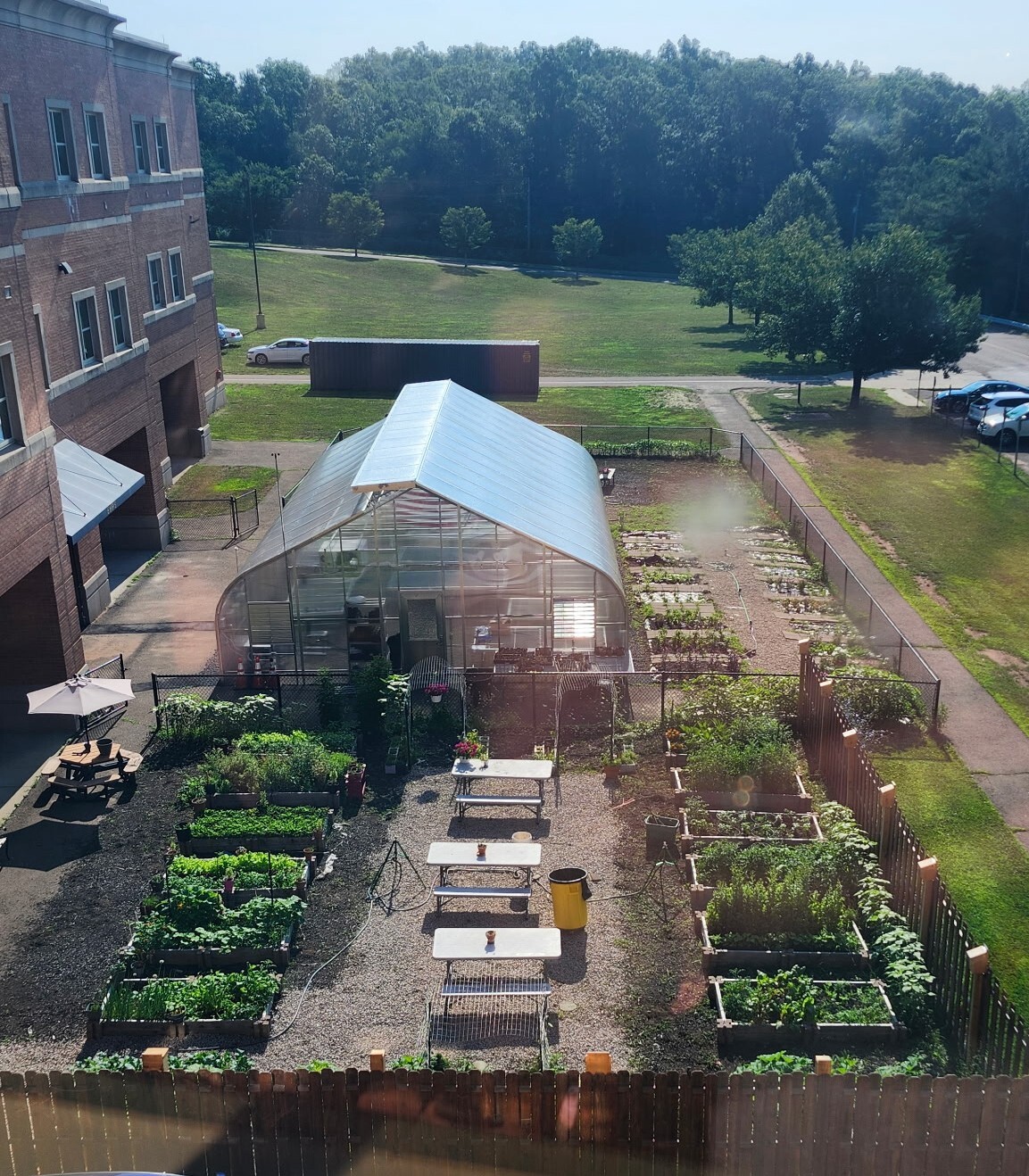
East Haven High School (EHHS) in East Haven, Connecticut is home to a new Rimol Greenhouse that is enhancing the lives of its students of all abilities.
John and Heather Profetto are culinary instructors at EHHS, bringing decades of experience in the restaurant business to their roles at the high school. When they first came on board at EHHS, John recalled the principal mentioning that they would love to have a school greenhouse one day. “The conversation grew and grew, and eventually we thought we might be able to look for a grant,” said John.
The public high school operates a Life Skills Special Education program to support post-graduate students with special needs that are ages 18-21, helping them transition into the working world and build self-sufficiency skills. When John and Heather learned about a grant program through the FDA that aimed to create opportunities for special needs students to support food services in underserved communities, it felt like the perfect fit. The school applied and was granted the funding to make their greenhouse dream a reality.
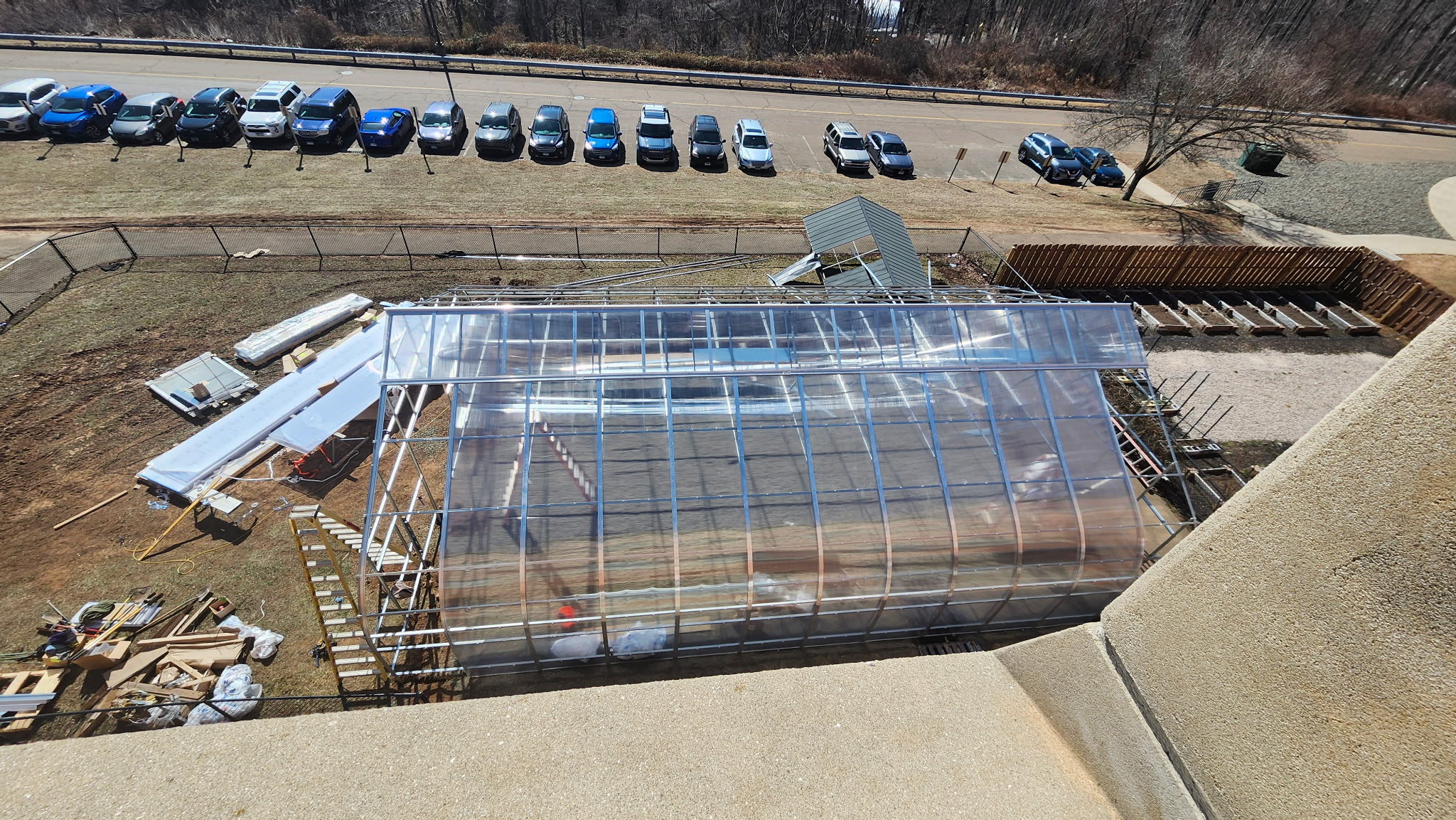
John came across Rimol Greenhouse Systems and connected with Southern New England sales representative Adam Earle during the process of applying for the grant. Adam worked closely with John and the EHHS team to design a 30’ x 48’ Nor’Easter institutional greenhouse with full polycarbonate covering.
“We didn’t know exactly what we were looking for,” said John. “I wanted something a whole class could be working in. Adam gave us a lot of options. We felt that Rimol was committed to helping us,” said John.
Once the grant funding was distributed in early 2025, EHHS worked with Adam to purchase the greenhouse, and they quickly kicked off the construction process. They worked with Rimol partner Sunnier Days Construction, which John said was a great experience. “We were missing those guys when it was over!” he laughed.
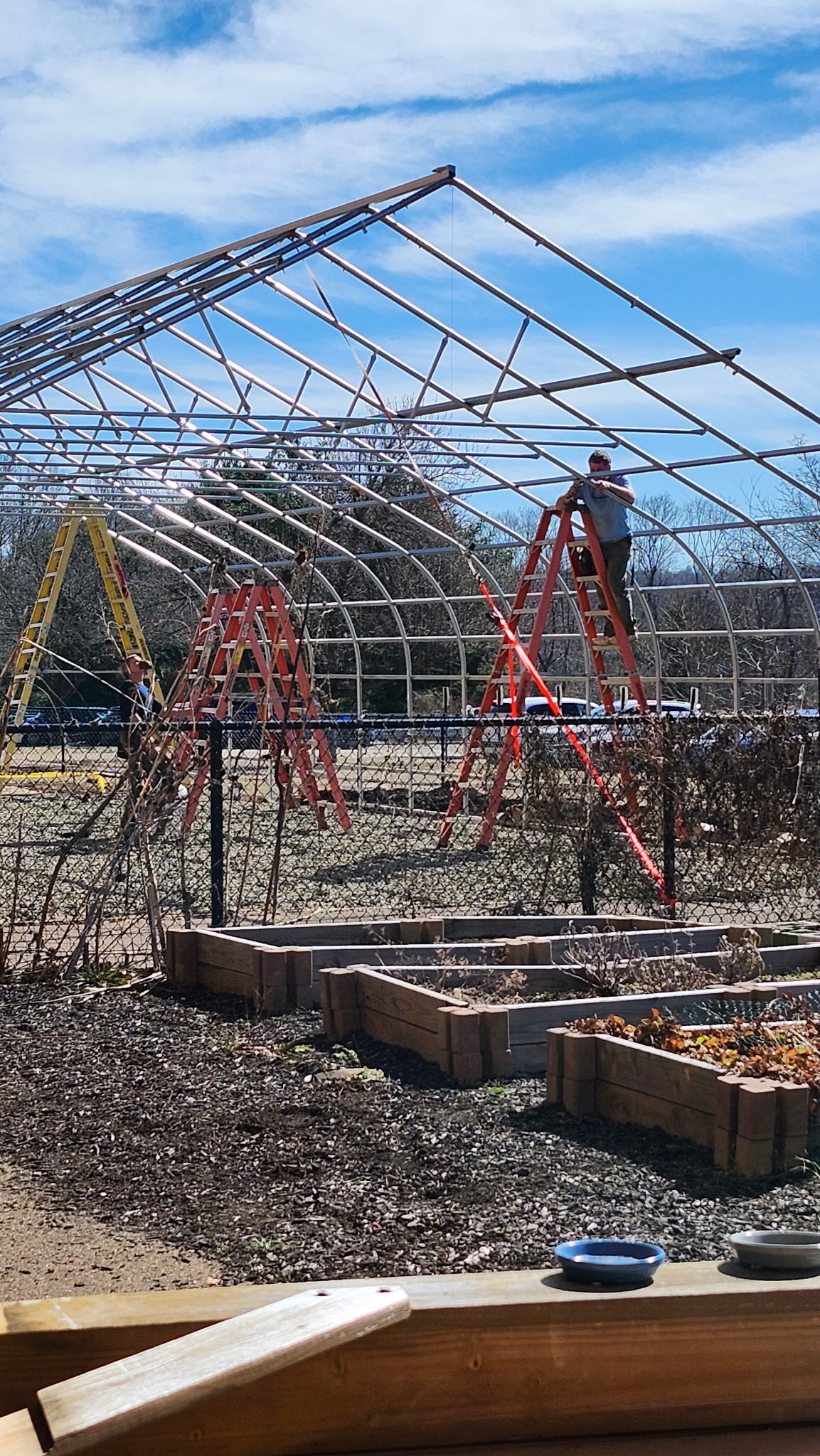
The greenhouse is outfitted with a ridge vent, motorized fans and shutters and a heater to keep it fully operational year-round. “All the automation makes a huge difference,” said John. “We don’t need to worry about regulating temperature or rolling up the sides – who is going to do that in the middle of summer when nobody is here? I love to bring people in and show them – if it gets too hot, just flip the switch and the whole roof opens.”
So far, the greenhouse has been primarily used by the Life Skills program, with students working on planting potted bulbs and caring for flowers inside the greenhouse. “We are learning as we go,” said John. “Some of the local greenhouses have been very helpful in getting us going.”
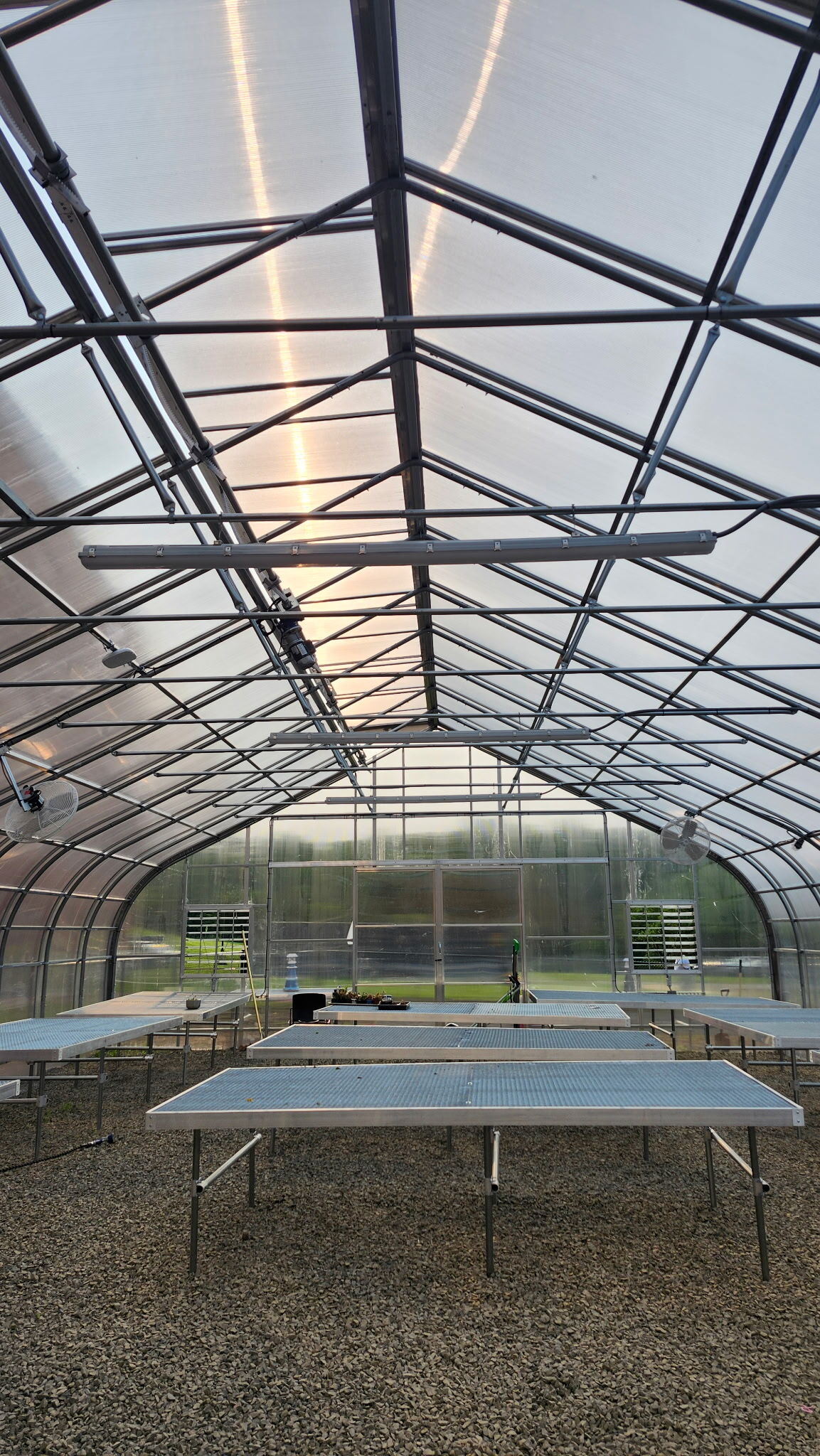
John and Heather plan to expand their use of the greenhouse to incorporate more students from the culinary program. “Kids have our class three days a week, so the idea is that every Friday class will be dedicated to the greenhouse, getting the kids to help out with growing vegetables and herbs in the raised beds we have outside of the greenhouse.”
John and Heather are also in the process of raising funds to purchase a small farm stand structure that will live outside of the greenhouse. This would allow the Life Skills students to sell some of the flowers and produce grown in the greenhouse, with the proceeds going back into the program. “It would be a great model for the rest of the state to be able to put in a program like this,” said John.